

The True Cost Of Ad Fraud: Direct And Hidden Losses
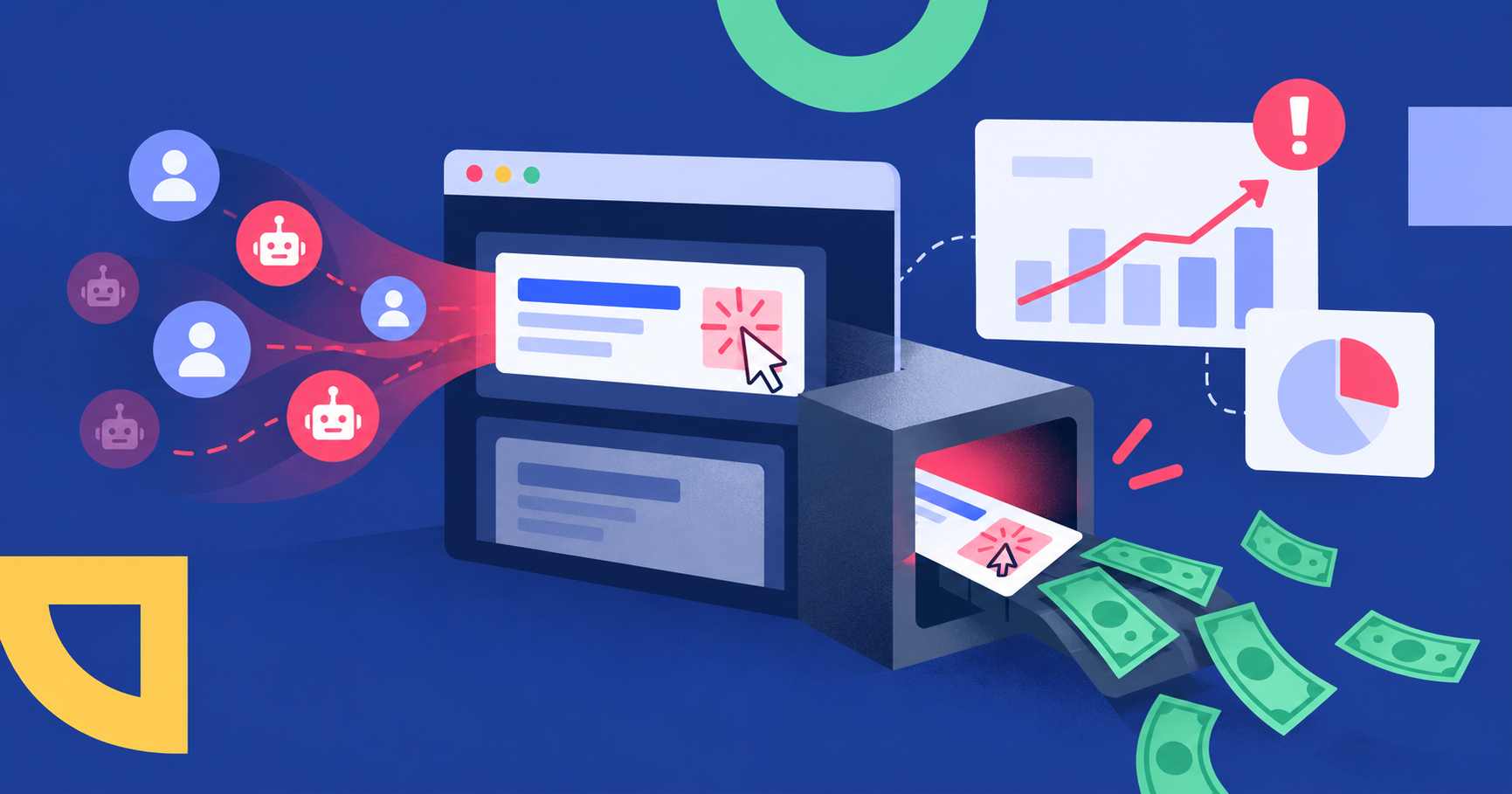
Ad fraud is projected to cost advertisers $172 billion by 2028, according to Juniper Research, but the figure on your invoice is only part of the damage. Beyond wasted clicks and installs, the deeper losses sit in corrupted attribution, polluted audiences, misdirected bidding algorithms, and inflated acquisition costs that compound quietly over time.
The cost of ad fraud is one of the most underestimated numbers in digital marketing. Most teams see the wasted media spend on their reports and assume that is the whole bill. It is not. The clicks you paid for are the visible tip of a much larger and more expensive problem.
When fraudulent and non-incremental traffic enters your funnel, it does not just waste a click. It poisons the data those clicks generate, and that polluted data drives every decision you make next. Effective click fraud prevention is not about clawing back a few wasted dollars. It is about protecting the integrity of everything downstream.
Sizing the Problem: Ad Fraud Statistics
The headline numbers are stark. Juniper Research projects that $172 billion in ad spend will be lost to ad fraud by 2028, more than double the $84 billion lost globally in 2023.
The bot problem behind those figures is accelerating too. The Imperva 2026 Bad Bot Report found that bots generated more than 53% of all web traffic in 2025, up from 51% in 2024. The report also identifies AI agents as a new category of internet participant, capable of interacting with websites, retrieving data and completing workflows in ways that can make automated and legitimate activity harder to distinguish.
Those statistics describe the scale. They do not describe the full cost, because the direct loss is only the beginning.
The Direct Costs of Ad Fraud
Direct costs are the ones marketers recognise immediately. They show up as spend with nothing of value on the other side.
Wasted media spend
Every fraudulent click consumes budget that could have reached a real prospect. In a fixed daily budget, fraud does not just cost you the click, it crowds out the genuine impressions you never got to serve. The opportunity cost compounds the cash cost.
Fraudulent clicks and installs
Bots, click farms, and malicious competitors generate clicks and app installs that will never convert. In performance campaigns billed per click or per install, this is a direct transfer of your budget to fraudsters. For mobile and app campaigns, fake installs can also trigger downstream bounty payments to fraudulent affiliates.
These direct losses are painful, but they are also the easiest to understand and the smallest part of the true cost. The expensive damage is the part that never appears as a line item.
The Hidden Cost of Corrupted Attribution and Analytics
The moment fraudulent traffic enters your funnel, your analytics stop telling the truth. Conversions get misattributed, channel performance is distorted, and the reports your team relies on quietly drift away from reality.
If a fraudulent or non-incremental click is credited with a conversion, you draw the wrong conclusion about which campaign, keyword, or creative is working. You then double down on the wrong things. The cost is not the click, it is the cascade of bad decisions that follow. We break this down further in our guide to how ad fraud impacts marketing KPIs.
The Hidden Cost of Polluted Audience Data and Remarketing Lists
Modern advertising runs on audiences. You build remarketing lists, lookalike audiences, and customer match segments from the traffic that interacts with your ads. When that traffic is fraudulent, your audiences inherit the contamination.
A remarketing list seeded with bot visits chases ghosts. A lookalike audience built on fraudulent conversions teaches the platform to find more of the wrong people. You then pay to expand an audience that was corrupt from the start, scaling the waste with every campaign. This is why prevention has to start with the traffic itself, a theme we explore in how invalid traffic affects marketing data and attribution.
The Hidden Cost of Misled Bidding Algorithms
This is one of the most expensive and least visible costs of ad fraud. Smart Bidding and automated strategies like Performance Max optimise toward the conversions they are fed. If fraud and non-incremental traffic generate some of those conversions, the algorithm learns to chase them.
The machine is doing exactly what you asked. It is finding more traffic that looks like the traffic that converted. The problem is that the training data was poisoned, so the algorithm scales the fraud on your behalf, confidently and at speed. You can read how Smart Bidding and invalid traffic interact in the Google Ads Help documentation.
Once an algorithm is optimising toward fraudulent signals, simply blocking the bad clicks after the fact is not enough. The model has already been taught the wrong lesson, and it keeps applying it until the underlying signal is cleaned.
The Hidden Cost of Wasted Team Time
Fraud does not only cost money, it costs hours. Analysts investigate performance anomalies that turn out to be bots. Media buyers reallocate budget based on inflated numbers. Leadership reviews reports that overstate success and then sets targets against them.
Every one of those hours is spent reacting to data that was never real. The opportunity cost is enormous, because that time could have gone toward genuine optimisation. Worse, when the team eventually loses trust in the numbers, the entire measurement function slows down.
The Hidden Cost of Inflated CAC and Distorted LTV
Fraud quietly breaks your unit economics. When fraudulent clicks inflate spend without producing real customers, your customer acquisition cost rises even though the dashboard may hide it behind misattributed conversions.
Lifetime value gets distorted from the other direction. Fake conversions and low-quality users dilute your LTV calculations, while genuine high-value customers are buried under noise. When CAC and LTV are both wrong, the ratio that should guide your entire growth strategy becomes meaningless. You are making major budget decisions on numbers that fraud has rewritten.
The Hidden Cost of Non-Incremental Traffic
Not all wasted spend comes from bots. A large and often larger cost comes from real users who were always going to convert, existing customers, brand searchers, and repeat clickers on a guaranteed path to buy.
This non-incremental traffic is invisible to bot-only detection tools because the users are genuinely human and genuinely converting. But paying to recapture a customer you already own adds nothing incremental, it just inflates reported ROAS while hiding the gap to incremental ROAS, or iROAS. We treat this as a major hidden cost in its own right in beyond click fraud: why non-incremental users are your biggest hidden cost.
When you add non-incremental spend to the fraud figures, the true cost of compromised traffic is far larger than the published statistics suggest. Much of it never appears in any fraud report, and your dashboard will never flag it. We dig into those invisible losses in hidden ROI losses your dashboard will never show you.
How TrafficGuard Prevents the Cost at the Source
Cleaning up after fraud is a losing game. By the time you reconcile invalid clicks, the bad data has already corrupted your attribution, polluted your audiences, and trained your bidding. TrafficGuard for Google Ads prevents the cost upstream, before it can spread.
Non-Incremental Click Reports
TrafficGuard separates genuinely new demand from traffic that was always going to convert. Non-Incremental Click Reports show exactly how much of your spend is recapturing existing customers, turning an invisible cost into a managed line item.
Click Frequency Rules
Click Frequency Rules and thresholds cap repeated clicks from the same user, stopping the budget drain from excessive clickers and repeat navigators without blocking genuine demand. This protects spend and keeps your conversion signals clean.
Watch a step-by-step walkthrough of how to set click frequency rules in TrafficGuard, capping clicks by IP address or device using thresholds, time windows and filters:
Shadow Campaigns
Shadow Campaigns let you reallocate budget away from fraudulent and non-incremental traffic and toward genuinely new customers. Instead of feeding poisoned signals to your bidding, you feed it clean data that reflects real growth. See a worked example in how to reduce CAC on Google Shopping campaigns with click frequency rules.
Watch our Solutions Engineer walk through how shadow campaigns are configured and monitored inside the TrafficGuard platform:
The shift is from fraud protection to optimisation integrity. When the traffic going in is clean, every downstream system, attribution, audiences, bidding, and reporting, starts telling the truth again.
The Bottom Line
The cost of ad fraud is never just the wasted click. It is the corrupted attribution, the polluted audiences, the misled algorithms, the wasted hours, the broken unit economics, and the non-incremental spend that no fraud report will ever flag. The brands that protect their margins are the ones that stop the problem at the source rather than reconciling it after the damage is done. See how TrafficGuard protects your Google Ads spend on the TrafficGuard for Search, or book a demo to uncover the true cost hiding in your account.
Frequently Asked Questions
What is the true cost of ad fraud?
The true cost of ad fraud is the total damage it causes, not just the wasted media spend. It includes direct losses from fraudulent clicks and installs plus hidden costs like corrupted attribution, polluted audiences, misled bidding, wasted team time, and distorted unit economics.
How much money is lost to ad fraud each year?
Juniper Research projects that global ad spend lost to fraud will exceed $100 billion in 2025, with North America alone accounting for around $50 billion. The 2023 figure was already about $84 billion globally, so the cost continues to rise.
What are the direct costs of ad fraud?
Direct costs are the visible losses: wasted media spend and payments for fraudulent clicks and installs that never convert. They are the easiest costs to spot but usually the smallest part of the overall damage.
What are the indirect or hidden costs of ad fraud?
Hidden costs include corrupted attribution and analytics, polluted audience and remarketing data, bidding algorithms that optimise toward fraud, wasted analyst time, inflated customer acquisition cost, and distorted lifetime value. These often dwarf the direct losses.
How does ad fraud affect bidding algorithms?
Smart Bidding and Performance Max optimise toward the conversions they are fed. If fraudulent or non-incremental traffic generates some of those conversions, the algorithm learns to chase similar traffic and scales the waste automatically until the underlying signal is cleaned.
What is non-incremental traffic and why is it a cost?
Non-incremental traffic is real users, such as existing customers and brand searchers, who were always going to convert. Paying to recapture them adds no incremental revenue, inflates reported ROAS, and is invisible to bot-only tools, making it one of the largest hidden costs of compromised traffic.
Why is bot traffic such a large problem now?
The Imperva 2025 Bad Bot Report found that automated traffic now makes up 51% of all web traffic, surpassing humans for the first time, with bad bots at 37%, up from 32% a year earlier. AI tools have made sophisticated bots cheaper to build and harder to detect.
How does TrafficGuard reduce the cost of ad fraud?
TrafficGuard prevents the cost at the source using Non-Incremental Click Reports to expose wasted spend, Click Frequency Rules to cap repeat clicks, and Shadow Campaigns to reallocate budget to new customers. This keeps attribution, audiences, and bidding clean rather than reconciling damage after the fact.
Get started - it's free
You can set up a TrafficGuard account in minutes, so we’ll be protecting your campaigns before you can say ‘sky-high ROI’.

Explore More Blogs

Subscribe
Subscribe now to get all the latest news and insights on digital advertising, machine learning and ad fraud.


