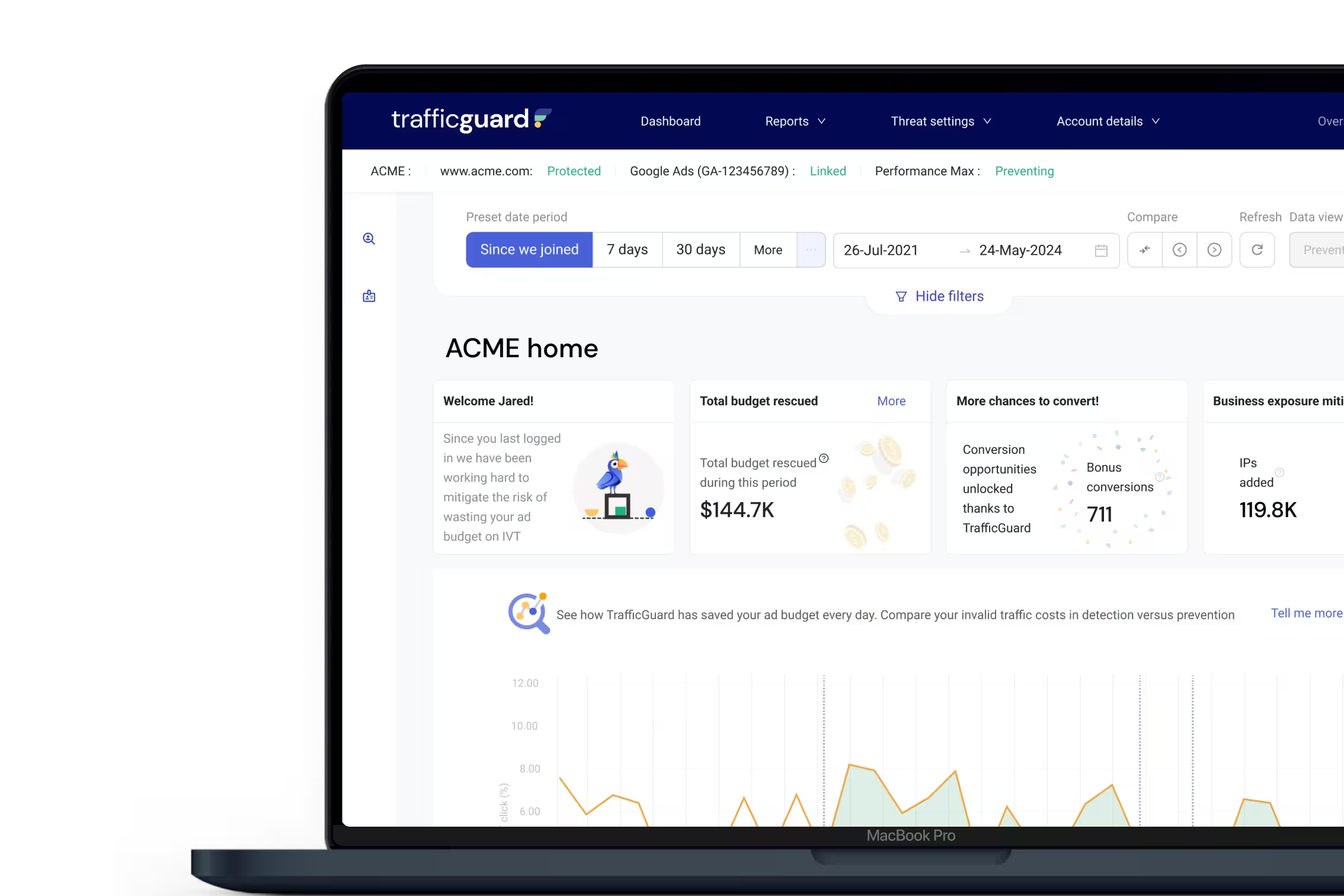
TrafficGuard for Education & eLearning
Stop Click Fraud in Student Acquisition Campaigns
Education campaigns face long research cycles, repeated paid clicks, and CRM-polluting bot traffic. TrafficGuard stops non-incremental behaviour at the click, ensuring your paid media funds enrolled students, not endless comparison activity.















The State of Click Fraud in Education & eLearning
Not every click is a future student.
Research behaviour, bots, and fake leads inflate paid performance without improving enrolments.
If left unchecked, optimisation shifts toward researchers, not enrollers, increasing cost per enrolment.
in education paid media CPCs
in education campaigns can be non-incremental
How TrafficGuard Protects Acquisition Budgets, Cleans Optimisation Signals, and Improves Cost Per Enrolment Across Education Campaigns?

Non-Incremental Research & Repeat Paid Clicks
User-Level Validation & Behavior Caps
TrafficGuard identifies when paid behaviour stops adding enrolment value and caps repeated paid clicks. The budget is redirected toward net-new prospective students, improving cost per enrolment without reducing reach.
Bots Scrape Course Content and Pricing
Real-Time Bot Blocking at the Point of Click
TrafficGuard blocks scraper bots before they ever land on your site or impact your budget. By removing automated traffic pre-funnel, we protect your intellectual property and ensure your high-CPC keywords are reserved for real prospective students.
Fake Leads and Polluted CRM Data
Funnel Integrity Protection for Student Acquisition
TrafficGuard removes invalid traffic before it becomes a lead. Admissions teams receive cleaner enquiries, and platforms optimise toward students who enrol, not form-fill noise.
Polluted Optimisation Signals
Clean Signals That Restore Enrolment-Focused Optimisation
TrafficGuard removes non-incremental and automated traffic before it impacts performance data. Clean signals enable platforms to optimise toward genuine prospective students, improving efficiency across Search, Meta, and remarketing campaigns.
Real Results Across Industries I Education & eLearning
Real Results for Education & eLearning Providers
TrafficGuard helps education and eLearning providers to protect high-CPC paid acquisition from bots, invalid clicks, and unprofitable paid behaviour. By blocking invalid traffic in real time, every click supports cleaner optimisation signals, stable bidding strategies, and predictable customer acquisition without increasing spend.
8.7%
of ad budget was lost to invalid clicks
56%
of invalid traffic was due to multiple clicks
26%
of invalid clicks were from bots
Alison | Fighting Ad Fraud in Education

Protect Your Education Campaigns With TrafficGuard

Choose Plan
We have multiple plans to meet your needs.
Explore Our Plans Details
Unlock Your Protection
TrafficGuard have different plans for different needs, choose the one that fits you best

In-depth Audit
Timeline of getting your site’s in-depth audit results.
What To Expect During the Audit Period?


How To Set Up
Simple steps to set up tracking. Enjoy our full funnel solution for your fintech campaigns.
How to set up tracking?


Recommended Resources
Stay up to date with TrafficGuard's latest resources on click fraud protection for education & eLearning marketers.


Trusted by Leading Education & eLearning Brands












FAQs of TrafficGuard for Education & eLearning Brands
Can’t find what you are looking for? Go to our support page to learn more.
Click fraud in education refers to invalid clicks generated by bots, automated scripts, competitors, or repeated research behaviour with no genuine enrollment intent.
In student acquisition campaigns, this often includes bots scraping course information, fake lead submissions, and non-incremental paid clicks that inflate performance metrics without increasing enrolled students.
Education campaigns operate in high-CPC environments with long decision cycles. Prospective students often click ads repeatedly while researching courses.
When combined with bot traffic and fake enquiries, this creates inflated lead volume, polluted CRM data, and rising cost per enrolment. As CPCs increase year over year, even small volumes of invalid traffic can significantly impact budget efficiency.
Non-incremental clicks occur when users repeatedly click paid ads during extended research phases without progressing toward enrolment.
These clicks may appear high intent but add no incremental value once the user would have returned organically. Over time, they inflate CPL and reduce cost efficiency across Search and social campaigns.
Fake student leads and low-intent enquiries can account for a meaningful percentage of total submissions in education campaigns.
These leads pollute CRM systems, waste admissions team resources, and distort performance reporting. By the time leads are filtered inside the CRM, ad spend and optimisation signals have already been affected.
When bots and non-enrolling users trigger engagement or conversion signals, advertising platforms optimise toward the wrong audience.
This polluted data causes algorithms to prioritise research-heavy behaviour instead of enrolment intent, increasing cost per enrolment and reducing long-term efficiency.
When invalid traffic and non-incremental clicks feed campaign data, platforms optimise toward the wrong behaviours.
Over time, this increases CPL, reduces enrolment yield, and compounds inefficiency across Search and paid social campaigns. Recovery can take weeks or months once optimisation signals are polluted.
Click fraud prevention removes invalid traffic and caps non-profitable paid behaviour before it impacts campaign data.
By protecting optimisation signals and reducing wasted spend, institutions improve cost per enrolled student without reducing campaign reach.
Yes. Education remarketing audiences are particularly vulnerable due to long research cycles.
Bots and non-enrolling users frequently enter retargeting pools, which can cause 25 to 35 percent of remarketing budgets to be spent on users who never intend to enrol. Cleaning top-of-funnel traffic improves retargeting efficiency downstream.
Ready To Protect Your Ad Spend?