

Ghost Conversions in Fintech: Why Your CAC Looks Fine But Growth Stalls

Your CAC looks fine. Conversions are coming in. Bids are holding.
But revenue growth is not moving.
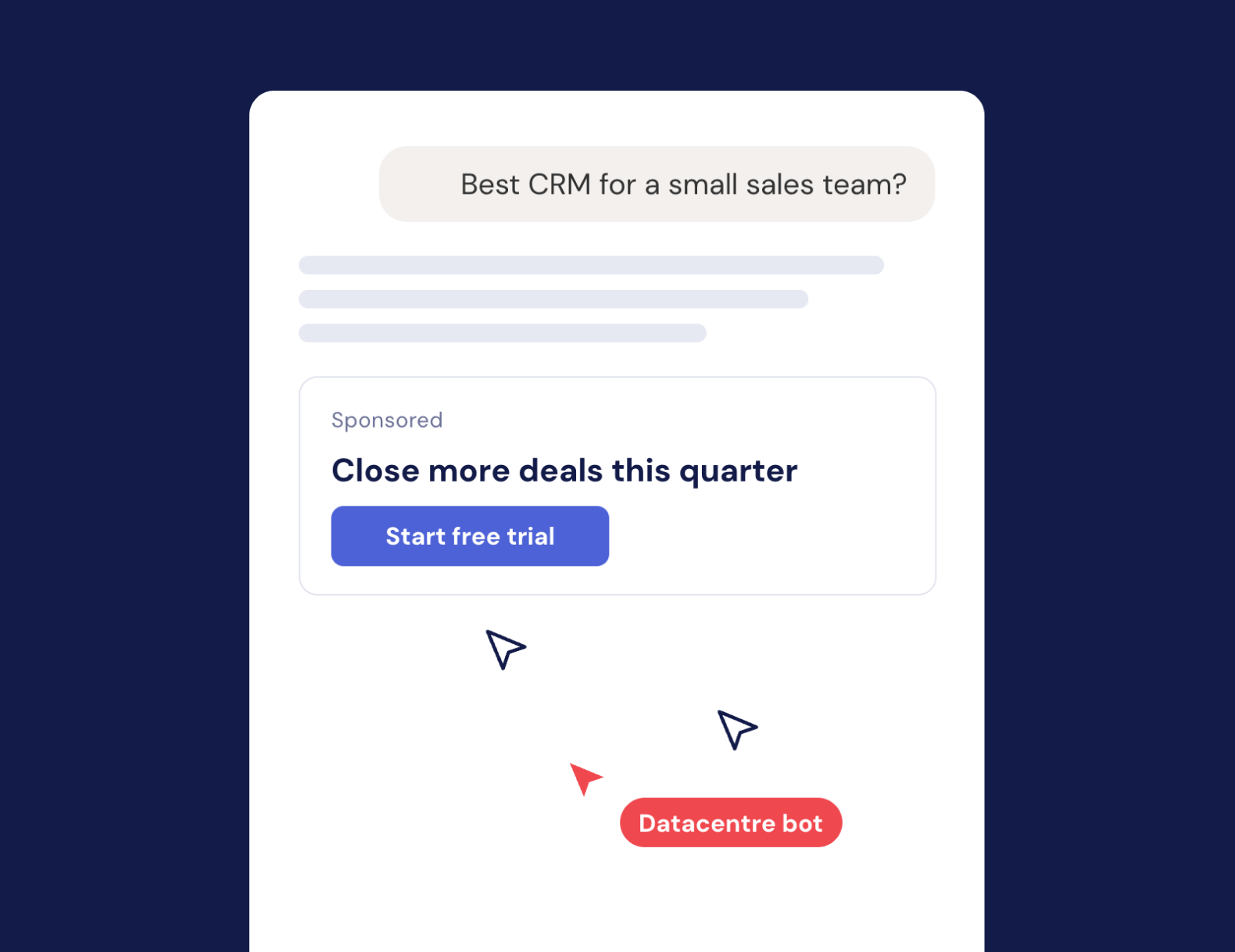
For many fintech and crypto brands, the issue isn’t demand or creatives, it’s ghost conversions. These are paid interactions that register as conversions but do not create net-new customers. They can come from existing users clicking branded ads, routine paid navigation during logins, or late-stage paid touches taking credit for work done elsewhere. They can also come from automated traffic such as bots, scripts, and arbitrage systems which interact with ads or landing pages in ways that trigger tracking and conversion events, even though there is no intent to purchase or engage.
Without robust click fraud protection software, ad platforms treat all of these interactions as genuine acquisition. The result: ad spend creeps up while your active user base remains stagnant.
In this blog, we uncover how ghost conversions infiltrate fintech attribution models, why they quietly inflate Customer Acquisition Cost (CAC), and how non-incremental paid behaviour compound the issue. We also show how fintech teams restore trust in acquisition data by separating real growth from paid noise.
What Ghost Conversions Mean in Fintech and Crypto Advertising
Paid Interactions That Look Like Acquisition
Ghost conversions occur when paid media claims credit for actions that don’t generate net-new customers.
Some are non-bot interactions: a logged-in user clicks a branded ad to access their account, a returning customer follows a paid link instead of a bookmark, or an existing wallet holder re-enters through paid media during normal usage. Each action triggers a conversion event, even though the user was already acquired.
Others come from automated traffic — bots, scripts, or arbitrage systems. These bots simulate human behaviour: clicking ads, filling out forms with dummy data, or following landing page flows. Ad platforms can’t distinguish them from real users, so each action registers as a conversion, even though no actual customer was gained.
The result is the same for both: ad spend increases, conversion numbers look good, but your actual user base remains flat.
No Net-New Customer Created: The High Cost of False Signals
In fintech and crypto sectors, this distinction is expensive. Customer lifetime value (LTV) is high, but Cost-Per-Click (CPC) is volatile. Real growth depends entirely on clean data signals.
When ghost conversions are counted as acquisition, campaigns appear efficient while underlying growth stalls. This is where click fraud prevention becomes a growth requirement, not a hygiene exercise.
Without filtering out this invalid traffic, you are essentially paying a premium to acquire your own existing users.
For a deeper look at how invalid traffic undermines fintech performance beyond attribution, see How Fintech Brands Can Protect Their Ad Spend from Click Fraud and Invalid Traffic.
How Paid Navigation Enters Fintech Attribution Models
Existing Users Clicking Branded Ads
Branded search is one of the most common sources of ghost conversions. Existing users search for your brand and click a paid result instead of an organic listing, saved link, or app icon.
The platform records a “successful” paid conversion. Attribution models reward the campaign. Budgets are protected or expanded.
Over time, paid media becomes a navigation layer for current customers rather than a true acquisition channel.
Late-Stage Paid Touches Stealing Credit
Paid media also captures credit late in the journey. A user might be originally driven by organic content, word-of-mouth, or a fintech partnership, but they finally convert only after clicking a retargeting ad or a branded impression.
Last-touch and blended attribution models assign value to the paid interaction, overstating paid performance and masking true demand sources.
Why Paid Navigation Quietly Inflates CAC
Spend Increases Without Customer Growth
Ghost conversions stabilise reported CAC while real acquisition slows. Budgets rise to maintain volume. Algorithms optimise for low-resistance actions. Net-new customers plateau.
This is why many fintech teams feel stuck. Performance reports look fine. Business results do not.
This effect is often compounded by invalid traffic quietly influencing bidding decisions. We break this down in detail in Why Fintech CPCs Are So High And How Invalid Traffic Makes Them Worse.
High-Value Users Become Expensive Navigators
Fintech’s most valuable users often generate the most ghost conversions. Frequent logins, balance checks, and price monitoring trigger repeated paid touches.
Instead of reaching new audiences, your paid media ends up escorting existing customers back into products they already use.
How Ghost Conversions Destabilise CAC and Forecasting
CAC Volatility
When attribution is polluted, CAC becomes unpredictable. Minor behavioural changes or bidding shifts create outsized swings in reported efficiency.
This volatility is not driven by market demand. It is driven by corrupted signals.
Finance Teams See Problems Before Marketing
Finance teams usually identify the issue first. Spend rises without proportional revenue growth. Forecasts miss targets. Payback periods stretch.
Marketing dashboards remain optimistic because ghost conversions continue to count as success.
How Polluted Paid Signals Affect Other Channels
Search Feeds Meta and Programmatic
Search conversion data feeds optimisation across Meta, programmatic, and automated bidding systems. When ghost conversions are treated as success, every channel learns the wrong behaviour.
Budgets are shifted toward users who navigate rather than convert.
Dirty Signals Spread Across the Stack
Retargeting pools fill with existing customers. Lookalike models skew toward low-intent behaviour. Performance flattens across channels.
Click fraud and automated traffic accelerate this effect by injecting further noise into already compromised datasets.
How Fintech Brands Restore Trust in Acquisition Data
User-Level Validation
The first step is visibility. User-level validation distinguishes new users from returning ones, genuine intent from navigation, and acquisition from access.
TrafficGuard analyses traffic at click and session level to identify invalid activity, non-genuine engagement, and returning user behaviour before it distorts attribution and bidding.
This allows fintech teams to protect spend, stabilise CAC, and measure growth accurately.
Clean Signals Retrain Algorithms
Once polluted signals are removed, platforms relearn what real acquisition looks like. Bidding becomes more efficient. Forecasting improves. Paid media starts funding incremental growth again.
Clean data restores confidence across marketing, finance, and leadership.
FAQs & Key Takeaways
1. What are ghost conversions in fintech advertising?
Ghost conversions are paid conversions that appear valid inside ad platforms but do not represent net-new customer acquisition. In fintech, this typically includes existing users clicking branded ads to log in, paid navigation during routine account access, or late-stage paid touches claiming credit for conversions that would have happened anyway. These interactions inflate reported performance without contributing to real growth.
2. How are ghost conversions different from click fraud?
Click fraud involves invalid or deceptive clicks, often generated by bots, scripts, or malicious actors with no genuine intent. Ghost conversions usually come from real users, but the behaviour is non-incremental. Without effective click fraud protection, ad platforms treat both as legitimate activity, allowing attribution and optimisation models to be distorted.
3. Why does CAC look fine when fintech growth is slowing?
CAC looks stable because non-incremental paid interactions are being counted as acquisition. When existing users repeatedly trigger paid conversions, spend increases while the customer base does not. This creates the illusion of efficiency, even as real growth stalls.
4. Which fintech channels are most affected by ghost conversions?
Branded search, Performance Max, retargeting, and programmatic campaigns are the most exposed. These channels rely heavily on automated attribution and conversion-based optimisation, making them especially vulnerable without click fraud prevention and user-level validation.
5. How do ghost conversions affect automated bidding?
Ghost conversions train bidding algorithms to optimise for navigation and repeat behaviour rather than new customer acquisition. Over time, this drives higher branded spend, greater reliance on retargeting, and weaker incremental growth.
6. How can fintech brands prevent ghost conversions?
Fintech brands can reduce ghost conversions by validating users at click and session level, separating new users from returning ones, and using click fraud prevention software that protects data quality, not just blocks obvious bots.
7. What happens if ghost conversions are ignored?
When ghost conversions are ignored, growth stalls, CAC becomes volatile, and forecasting accuracy declines. Paid media gradually shifts from a growth engine into a cost centre, while trust between marketing, finance, and leadership erodes.
8. Why can CAC look healthy while fintech growth is slowing?
Because attribution integrity is compromised. Ghost conversions and click fraud push paid media towards paid navigation instead of acquisition. Clean signals are what restore real, measurable growth.
Get started - it's free
You can set up a TrafficGuard account in minutes, so we’ll be protecting your campaigns before you can say ‘sky-high ROI’.

Explore More Blogs

Subscribe
Subscribe now to get all the latest news and insights on digital advertising, machine learning and ad fraud.


