
TrafficGuard for Social: Stop Paying for Meta Ads Bot Traffic

TrafficGuard for Social verifies the users behind your Facebook and Instagram ad traffic, identifying bots, invalid activity and repeat engagement before those signals keep feeding campaign optimisation. The result is cleaner audiences, better delivery signals and more budget directed towards genuine demand.
Meta Ads Bot Traffic Does More Than Inflate Your Numbers
On Meta, you are not simply paying for clicks. Your campaigns pay for delivery, while Meta's algorithms continuously learn from the people who see, click and engage with your ads.
That makes bad traffic a compounding problem.
A bot clicks your ad. Meta sees engagement. Similar activity happens again. Without another layer of verification, those interactions can sit alongside genuine engagement as signals your campaigns use to optimise delivery.
The risk is not just the invalid traffic you see today. It is continuing to spend impressions reaching users and behaviours that look valuable to the algorithm but are not valuable to your business.
That is why looking at the difference between Meta clicks and website sessions is not enough. The important question is who or what is actually behind the traffic your campaigns are learning from.
See What Meta Cannot Show You From the Click Alone
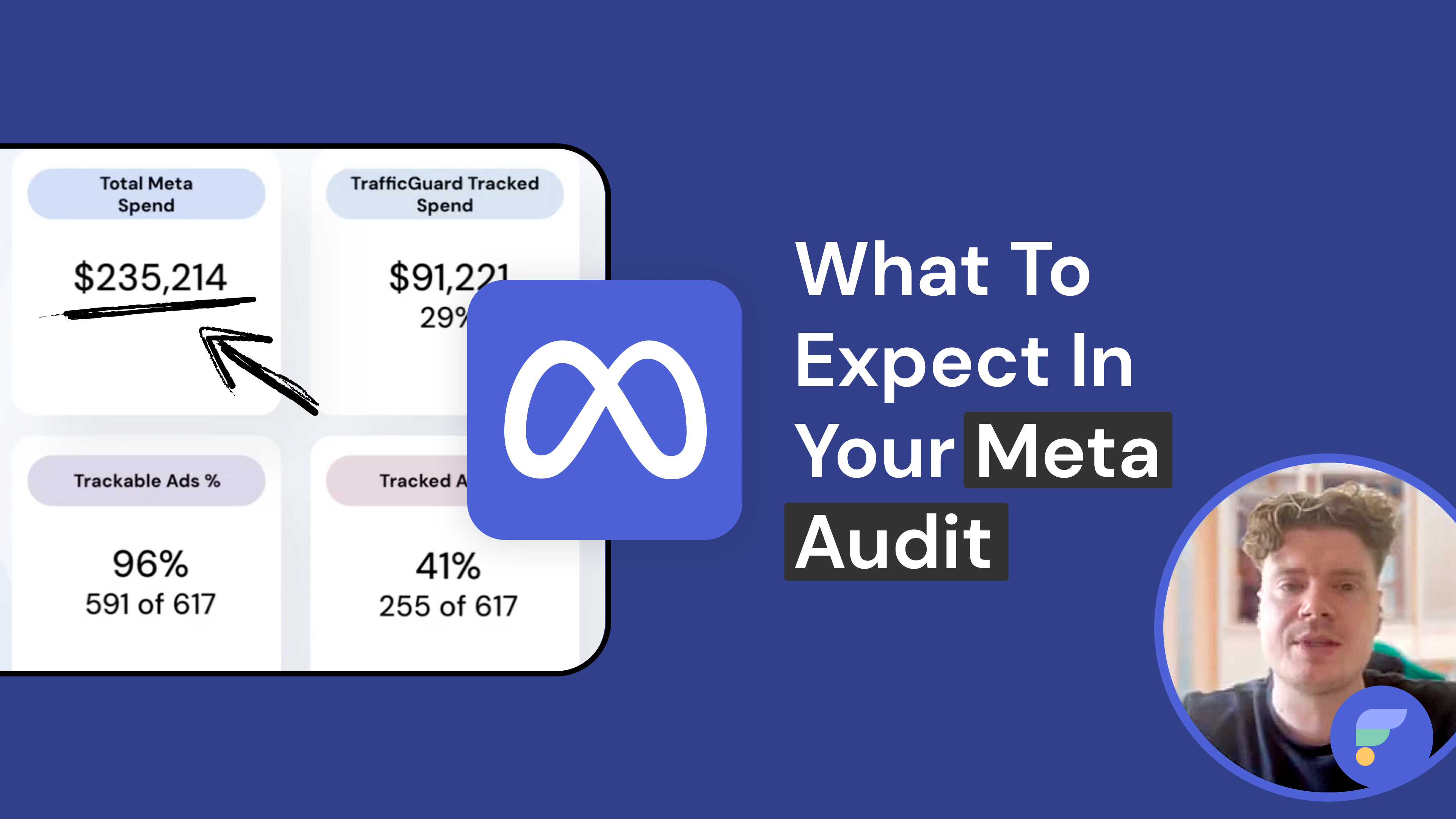
TrafficGuard for Social verifies traffic at browser level as users arrive from your ads, giving you an independent view of the activity behind your Meta reporting.
The video shows what that looks like in practice.
You will see how TrafficGuard identifies bots and automated traffic, non-genuine engagement and non-incremental activity, such as the same person repeatedly clicking an ad without converting.
You can start with a demo in detection mode to measure the problem against your own campaigns. TrafficGuard shows the associated invalid cost, the campaigns and ad sets affected, and the threats driving it.
Clean the Signal Meta Optimises Towards
Once protection is enabled, TrafficGuard turns that verification into cleaner targeting.
Invalid users can be labelled TG Invalid User, added to an Invalid Audience and excluded from future targeting. Frequency controls can also limit how often you pay to bring the same user back through an ad.
That matters because you are not only removing bad traffic. You are reducing the opportunity for invalid and repetitive engagement to keep influencing who your campaigns spend impressions trying to reach.
Instead of allowing bots and low-value repeat activity to keep feeding the optimisation loop, you give Meta a cleaner pool of genuine engagement to learn from.
The video walks through the full process, from identifying invalid traffic to measuring the budget protected, across up to 25 Meta ad accounts connected through one Business Portfolio.
Meta Ads Bot Traffic FAQs
What is Meta ads bot traffic?
Automated, non-human activity that clicks paid ads on Facebook and Instagram, including bot networks, click farms, headless browsers and malware-driven engagement. It is distinct from a broken conversion or a measurement gap, because the click itself is usually recorded correctly. Only the person behind it does not exist.
Can Meta detect bot traffic on its own?
Meta filters invalid activity, and it does that well for the purpose it serves, which is protecting billing integrity across all advertisers. It is not built to validate traffic quality for any single one of them, so activity that looks ordinary at the point of the click is not removed and still feeds campaign optimisation.
How much of my Meta ad spend is likely to be invalid?
It varies by vertical, placement and how much of the account runs on automated delivery, so an industry average is the wrong figure to plan against. TrafficGuard for Social measures invalid cost on your own account before anything is blocked, which is the only number worth acting on.
Why does bot traffic matter more on Meta than it used to?
Advantage+ and automated bidding choose audiences from click behaviour. Invalid clicks in that signal push delivery toward more of the same profile, so the waste accumulates instead of staying flat. That is the mechanism behind rising CPA with no visible cause.
Will excluding invalid clicks reduce my reach?
No. The exclusion applies to individuals already identified, not to targeting criteria you set. Repeat clickers are capped rather than banned, so genuine customers who click more than once can still reach you.
Do I need to manage exclusions manually?
No. Once prevention is on, identified users are labelled and collected into the invalid audience automatically, and the exclusion is applied across every ad set in the connected portfolio.
Can the click frequency limit be changed after activation?
Yes. The limit per user is a setting rather than a fixed rule, so it can be tuned as you learn what normal looks like in your account.
Does this cover Instagram as well as Facebook?
Yes. TrafficGuard for Social protects Meta ads across Facebook and Instagram from the same single connection to your Meta Business Portfolio.
The Bottom Line
You cannot optimise your way out of traffic that was never going to buy. When bots and invalid users engage with your Meta ads, the problem does not end with that interaction. Those signals can influence who the algorithm delivers to next, putting more of your impression spend behind traffic that looks valuable but is not.
TrafficGuard breaks that cycle by identifying invalid users and removing them from future targeting. That means less budget spent reaching bad traffic, and cleaner signals for Meta to optimise against.
Every Meta account has a cost attached to invalid traffic. Most advertisers have never seen theirs.
Book a demo with TrafficGuard and see what invalid traffic is costing your campaigns.
Explore Other Videos

Subscribe
Subscribe now to get all the latest news and insights on digital advertising, machine learning and ad fraud.


