

Cross-Platform Ad Consistency: The Complete Guide for Performance Marketers in 2026

Advertisers running cross-platform campaigns can see up to a 33% uplift in revenue when brand presentation is consistent, according to research from Marq. Yet most never realise that return. Not because their messaging is wrong, but because their audience is.
Campaigns today span Google, Meta, YouTube, and programmatic channels. While marketers focus on aligning creative, tone, and visuals across platforms, a more fundamental issue is often ignored. The same campaigns are being exposed to inconsistent, and often non-genuine, audiences.
This is where click fraud protection becomes critical. Without it, invalid traffic does not just waste budget on one channel. It contaminates audience segments, distorts attribution, and feeds misleading signals into optimisation systems across every platform.
The result is a structural gap between perceived consistency and actual performance. Your ads may be aligned. Your data is not.
What is cross-platform ad consistency? Definition and scope
Cross-platform ad consistency is the ability to maintain a unified brand message, experience, and performance outcome across multiple digital advertising platforms.
It goes beyond creative alignment. True consistency operates across three layers:
Messaging consistency vs visual consistency vs audience consistency
- Messaging consistency ensures your value proposition and tone remain stable
- Visual consistency ensures your creative execution is recognisable across formats
- Audience consistency ensures you are reaching the same quality of users across platforms
Most marketers solve for the first two. The third is where performance breaks.
When invalid traffic enters your campaigns, audience consistency collapses. Bots, repeated users, and non-incremental clicks behave differently across platforms, fragmenting your data and distorting optimisation.
If you want a deeper breakdown of how this works, it starts with understanding invalid traffic and how it moves across channels.
Why cross-platform consistency is a performance problem, not just a brand problem
Consistency is often framed as a branding exercise. In reality, it is a performance multiplier.
If your audience varies in quality across platforms:
- Conversion rates become unstable
- Attribution becomes unreliable
- Budget allocation becomes inefficient
Consistency only drives ROI when it is built on clean inputs. Without that, it amplifies inefficiency.
Why cross-platform ad consistency matters: The business case
Brand recognition and trust: what the data shows
Consistent brand presentation can increase revenue by up to 33% (Marq). Meanwhile, Nielsen shows that cross-platform campaigns deliver stronger reach and recall compared to single-channel strategies.
These gains depend on consistency at more than just the creative level. The audience quality behind those campaigns matters too.
If a measurable portion of traffic across platforms is non-genuine, optimisation systems begin learning from distorted engagement signals rather than real customer behaviour. Industry-wide, Juniper Research estimates global ad fraud losses will exceed $100 billion annually, highlighting how audience quality now directly impacts campaign efficiency and attribution accuracy.
Conversion rate impact: how consistency affects the full customer journey
Cross-platform consistency improves conversion rates by reinforcing messaging across touchpoints.
But when invalid traffic enters the journey:
- Engagement metrics become inflated
- Conversion rates become inconsistent
- Optimisation systems learn from distorted signals
This leads to gradual performance decline, even when campaigns appear stable.
The hidden cost: what happens when consistency breaks down
When consistency fails, the impact compounds across platforms.
You will see:
- Rising cost per acquisition
- Lower return on ad spend
- Increased audience overlap without incremental value
More importantly, invalid traffic spreads into:
- Retargeting pools
- Lookalike audiences
- Attribution models
According to IAB guidelines, invalid traffic is classified into general and sophisticated categories, both of which can silently influence campaign data.
Consistency at scale becomes impossible when the underlying audience is inconsistent.
How to achieve cross-platform ad consistency: A 5-step framework
Step 1: Define your core message architecture (platform-agnostic first)
Every consistent campaign starts with a clear message architecture.
Define:
- Core value proposition
- Supporting messaging pillars
- Target audience segments
This ensures your campaigns are built from a single strategic foundation, not adapted in isolation.
Step 2: Build a visual identity system that adapts without diluting
Each platform demands different formats. Consistency does not mean identical creatives.
Instead, build:
- Flexible design templates
- Clear brand guidelines
- Adaptable visual systems
This ensures recognition without limiting performance.
Step 3: Synchronise your audience segments across platforms
Audience consistency is where performance is won or lost.
Different platforms interpret audiences differently:
- Google prioritises intent
- Meta prioritises behaviour
- YouTube blends discovery and intent
To maintain consistency:
- Align audience definitions
- Monitor duplication and overlap
- Identify non-incremental clicks
Repeated users often return through paid ads, especially on brand terms. These interactions inflate demand signals without adding value.
Step 4: Unify attribution to measure true cross-platform performance
Cross-platform consistency cannot be measured without unified attribution.
Relying on platform-reported data creates:
- Double counting
- Misaligned performance metrics
- Incorrect optimisation decisions
Using cross-platform analytics tools and frameworks such as Google’s attribution guide helps marketers:
- Track full customer journeys
- Identify true incremental impact
- Allocate budget effectively
Step 5: Audit your traffic quality before scaling consistent campaigns
This is the step most marketers ignore.
Before scaling campaigns, you must understand:
- Who is clicking your ads
- Whether those clicks are incremental
- How much budget is exposed to invalid traffic
Research shows how invalid traffic drains your budget, often blending into normal campaign activity.
Using TrafficGuard’s click fraud detection software, marketers can audit your cross-platform traffic quality and identify:
- Non-genuine engagement
- Repeated user behaviour
- Bot-driven activity
Without this step, consistency amplifies wasted spend.
Cross-platform ad consistency by channel: what changes and what must stay fixed
Table A: Cross-platform ad consistency by channel

To maintain performance across these channels, advertisers must ensure both message consistency and traffic integrity.
On Google Search, high-intent queries often attract repeated clicks from existing users, competitors, and automated activity. Without controls in place, this inflates demand signals and distorts optimisation. This is why brands need to protect your Google Search campaigns from non-genuine interactions that directly impact CPC and conversion rates.
On Meta and Instagram, the challenge shifts to engagement quality. Campaigns rely heavily on behavioural signals to optimise delivery. When those signals are influenced by fake engagement or non-incremental users, audience models degrade quickly. Brands must actively protect your social media ads to ensure that engagement reflects real user intent.
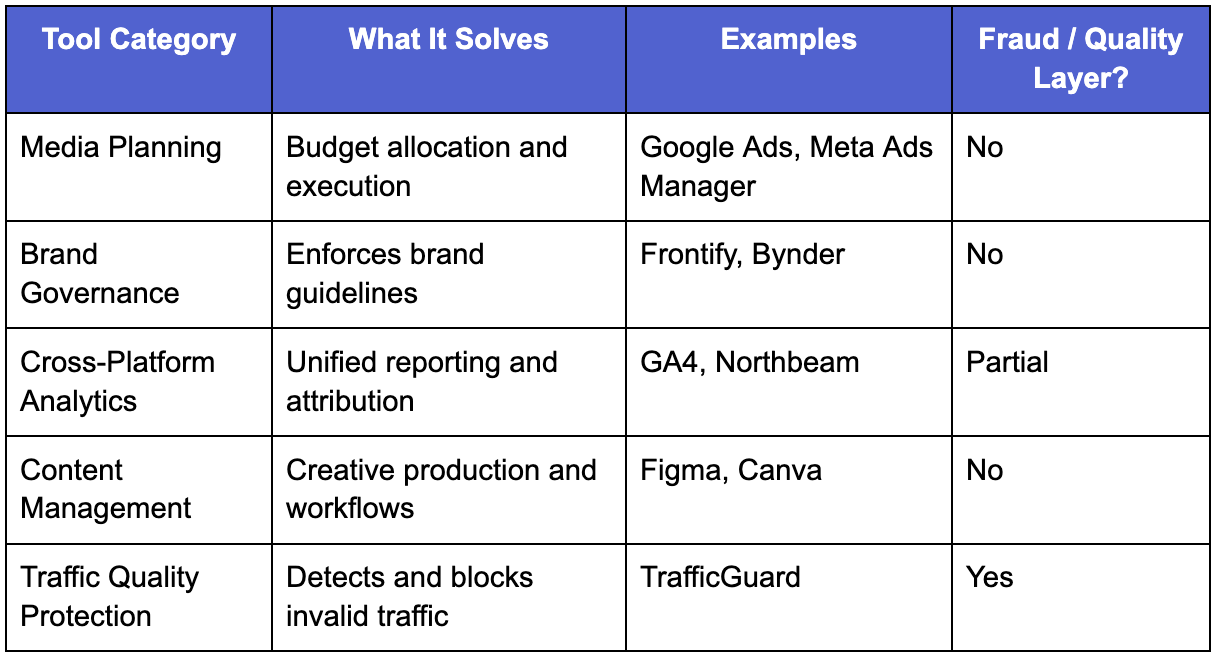
Tools that support cross-platform ad consistency
Table B: Tools for cross-platform ad consistency
Traffic quality and fraud prevention: the missing layer
Cross-platform consistency is often treated as a creative challenge. In reality, it is a data integrity problem.
Until traffic quality is controlled, consistency will remain surface-level. The campaigns may look aligned, but the performance will never follow.
Clean inputs are what make consistent strategy work.
Frequently Asked Questions
How do I know if my cross-platform traffic is consistent?
You need to compare audience behaviour across platforms, not just performance metrics. Look for differences in conversion rates, engagement patterns, and repeat user activity. Large variations often indicate inconsistent or non-genuine traffic.
How much of my ad spend is typically affected by invalid traffic?
It varies by industry and channel, but industry research shows a measurable share of paid traffic is non-genuine. High-CPC campaigns, especially on Google Search, tend to be more exposed due to competitive targeting and automated activity.
Why do my conversion rates differ across Google and Meta if my messaging is consistent?
Because the audience is different. Each platform builds and targets users differently, and invalid traffic can influence one platform more than another. This creates inconsistent performance even when creative and messaging are aligned.
What is non-incremental traffic and why does it matter?
Non-incremental traffic comes from users who would have converted without clicking your ad, such as existing customers using paid search to navigate. It inflates performance metrics while adding no real value, distorting optimisation decisions.
How does invalid traffic impact Smart Bidding and campaign optimisation?
Invalid traffic feeds false signals into optimisation systems. Smart Bidding learns from user behaviour, so when that behaviour is non-genuine, it adjusts bids based on inaccurate data, leading to inefficient spend and lower returns.
Should I optimise for consistency first or traffic quality first?
Traffic quality should come first. Without clean data, consistent messaging will not translate into consistent performance. Ensuring you are targeting genuine users is the foundation for any scalable cross-platform strategy.
How often should I audit traffic quality across my campaigns?
At minimum, before scaling budgets or launching major campaigns. For high-spend accounts, ongoing monitoring is recommended to prevent gradual performance degradation caused by invalid traffic.
What are the first signs that invalid traffic is affecting my campaigns?
Common indicators include:
- High click volume with low conversion rates
- Repeated clicks from the same users
- Sudden spikes in traffic without corresponding revenue
- Inconsistent performance across platforms
These signals often appear normal at first but point to deeper data quality issues.
Get started - it's free
You can set up a TrafficGuard account in minutes, so we’ll be protecting your campaigns before you can say ‘sky-high ROI’.

Explore More Blogs



Subscribe
Subscribe now to get all the latest news and insights on digital advertising, machine learning and ad fraud.


