

AI Bots That Mimic Humans: The New Face of Invalid Traffic
Sophisticated bots are automated traffic that uses adversarial AI to imitate real human behaviour, from cursor movement and typing rhythm to full browsing journeys, so it slips past filters built to catch older scripted bots. This invalid traffic drains Search, Meta, and Affiliate budgets while looking like genuine users, and corrupts the conversion data your campaigns optimise against. Catching it takes machine learning that adapts as fast as the fraud does, not static rules. Here is how the mimicry works, why it matters for performance teams, and how TrafficGuard detects it.
Every time a Google Ads or Meta ad loads, a complex auction resolves in a fraction of a second. In that instant, a quieter contest plays out. On one side sit the detection systems parsing thousands of signals to confirm an ad reached a real person with real intent. On the other sit the mimicry masters: fraud operations using machine learning to study, imitate, and slip past those defences in real time. Sophisticated bots are now the fastest-growing source of invalid traffic, and they are engineered to look undeniably human.
Why Invalid Traffic Is No Longer Simple to Spot
Invalid traffic used to follow obvious patterns. Bots ran static scripts, repeated the same actions, clicked at fixed intervals, and carried outdated user agents. Signature-based filters caught them.
Fraudsters now use adversarial models to probe detection systems, send test traffic, and watch which clicks and impressions get through. From those observations the attacker maps the boundary between “suspicious” and “normal”, then generates synthetic interactions that sit comfortably inside the normal range.
The result is traffic that looks human but converts like a bot: excessive clickers burning through Search budgets with no intent to buy, low-quality users inflating Meta engagement, and click injection misattributing affiliate conversions to the wrong partner. None of it is incremental and all of it corrupts the data your ad platform provider’s optimisation depends on.
The Art of Human Mimicry
The goal of adversarial fraud is to look undeniably human. Networks deploy behavioural generators that imitate the way people physically use devices, and bots increasingly move through residential proxies and headless browsers and other evasion tactics to mix with genuine traffic.
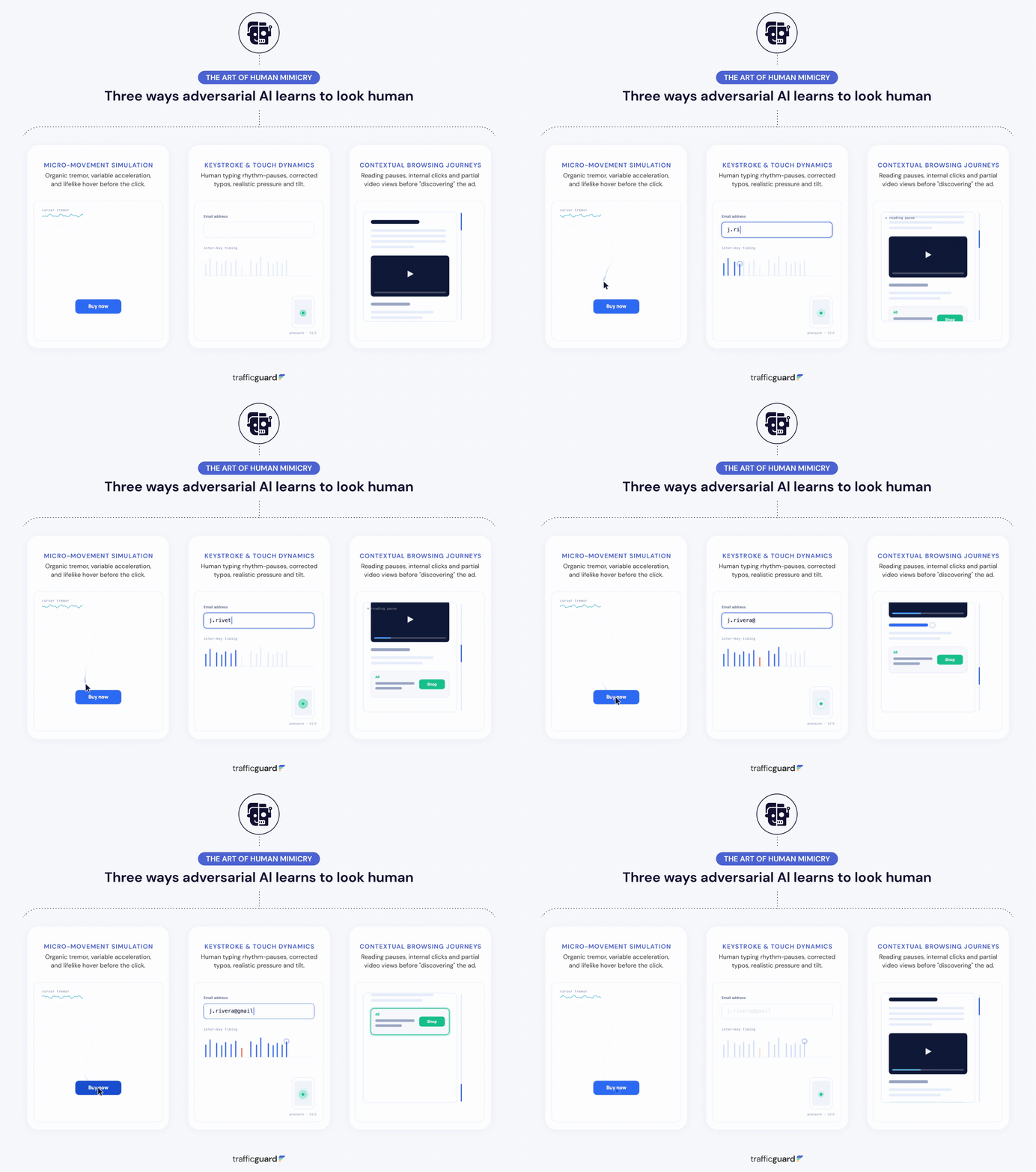
Micro-movement simulation: people do not move a cursor in a straight line or click the exact centre of a button. Adversarial models reproduce organic tremors, variable acceleration, and realistic hover patterns.
Natural keystroke and touch dynamics: bots mimic human typing rhythm on forms, including pauses, corrected typos, and realistic pressure and tilt on mobile screens.
Contextual browsing journeys: rather than bouncing straight to an ad, they simulate cognitive journeys, scroll pauses that imitate reading, clicks on internal links, partial video views, and search queries before “discovering” the ad.
This is the agentic bot problem: AI-driven traffic is increasingly engineered to behave like a person. It is this new threat class TrafficGuard’s detection roadmap is built to counter.
A single advertiser’s data is not enough to defend against this. TrafficGuard trains its models across thousands of advertisers worldwide, so a mimicry pattern that surfaces on one account hardens detection for every account, without ever sharing one customer’s raw data with another.
Why This Matters for Performance Teams
Advertisers need services that stress-test against adversarial traffic. Detection that only recognises yesterday’s patterns will miss tomorrow’s mimicry. TrafficGuard typically invalidates between 14% and 22% of paid search traffic that would otherwise have looked acceptable and polluted ongoing conversion optimisation like PMax.
The hidden cost of mimicry is corrupted conversion data sending your optimisation in the wrong direction. When invalid interactions look human, your bidding algorithm learns from them, and every wrong signal compounds across the campaign.
How TrafficGuard Addresses It
Faced with an adversary that adapts in real time, static rules and list-based filtering often miss sophisticated fraud and invalidate genuine customers.
TrafficGuard takes a surgical approach combining behavioural analysis, anomaly detection, classification, and predictive machine learning to score validity, isolate non-incremental and non-human traffic, and protect genuine clicks that drive conversions. In Prevention Mode TrafficGuard acts on that verdict, for instance by adding constantly evolving smart ranges of IPs to Google Ads exclusions.
The models are validated continuously, and robust AI and statistical aggregation filters out low-volume, slow-burn injections before they can move baseline campaign conversions with invalid data. Detection runs across Search, Meta, Affiliate, and Mobile from one platform, so a pattern learned in one channel informs defence in the others.
What to Look for Next
The contest against invalid traffic is no longer about building higher walls. It is about running smarter, faster, self-correcting systems that out-learn the mimicry masters. Before you change anything, look at where your conversion data stops making sense: campaigns with healthy click volume but falling conversion quality, sudden engagement spikes with no revenue behind them, and affiliate conversions credited to partners whose journeys do not add up.
Frequently Asked Questions
What are sophisticated bots?
Sophisticated bots are automated traffic that uses adversarial machine learning to imitate genuine human behaviour. Unlike older bots that ran static scripts and repeated fixed actions, they study detection systems and generate synthetic interactions that sit inside the range a filter treats as normal, so they convert like a bot while looking like a person.
How do AI bots mimic human behaviour?
They reproduce the small signals that used to give bots away. That includes micro-movement simulation (organic cursor tremors, variable acceleration, realistic hover), natural keystroke and touch dynamics (typing pauses, corrected typos, realistic pressure on mobile), and contextual browsing journeys (scroll pauses that imitate reading, internal clicks, and search queries before “discovering” the ad). Many also route through residential proxies to blend with real traffic.
How is this different from a bot farm?
A bot farm is about scale and infrastructure. Sophisticated, AI-driven bots are about behavioural quality, traffic engineered to behave like a real person rather than simply generate volume. This is what TrafficGuard calls the agentic bot problem, and it is the threat class its detection roadmap is built to counter.
What is adversarial AI ad fraud?
Adversarial AI ad fraud is when fraud operations use machine learning to actively probe detection systems, send test traffic, and observe which clicks and impressions get through. From that they map the boundary between "suspicious" and "normal" and generate synthetic interactions that sit inside the normal range. It is adversarial because the fraud adapts in real time to defeat the defences built to stop it, which is why static, signature-based filters struggle to keep pace.
Can sophisticated bots get past Google and Meta's filters?
Yes. Because they imitate genuine human behaviour, sophisticated bots routinely pass the platform filters built to catch older, scripted bots, and the invalid interactions then look acceptable to your ad platform provider's optimisation. TrafficGuard typically invalidates between 14% and 22% of paid search traffic that would otherwise have looked legitimate and polluted ongoing conversion optimisation like PMax.
How do sophisticated bots affect my campaign performance?
The hidden cost is corrupted conversion data. When invalid interactions look human, your bidding algorithm learns from them, so every wrong signal compounds across the campaign and pushes optimisation in the wrong direction. The symptoms show up as campaigns with healthy click volume but falling conversion quality, sudden engagement spikes with no revenue behind them, and affiliate conversions credited to partners whose journeys do not add up.
Why aren't static rules and blocklists enough to stop invalid traffic?
Because the adversary adapts in real time. Static rules and list-based filtering recognise yesterday's patterns, so they miss tomorrow's mimicry and often invalidate genuine customers in the process. Effective invalid traffic detection needs continuous, self-correcting machine learning that scores every interaction as it happens and validates its models continuously, across Search, Meta, Affiliate, and Mobile, so a pattern learned in one channel informs defence in the others.
How does TrafficGuard detect bots that look human?
TrafficGuard combines behavioural analysis, anomaly detection, classification, and predictive machine learning to score every interaction in real time, and trains its models across thousands of advertisers so a pattern caught on one account hardens detection for all. In Prevention Mode it acts on that verdict, for instance by adding constantly evolving smart ranges of IPs to Google Ads exclusions.
The Bottom Line
Sophisticated bots that mimic human behaviour have turned invalid traffic into a moving target, and detection built for yesterday’s patterns will miss tomorrow’s. The defence is continuous, cross-channel, self-correcting machine learning that scores every interaction in real time. See how much of your spend is reaching real people. Start a free audit.
Get started - it's free
You can set up a TrafficGuard account in minutes, so we’ll be protecting your campaigns before you can say ‘sky-high ROI’.

Explore More Blogs



Subscribe
Subscribe now to get all the latest news and insights on digital advertising, machine learning and ad fraud.


