

5 Paid-Search Truths Hiding Behind a Healthy-Looking CAC
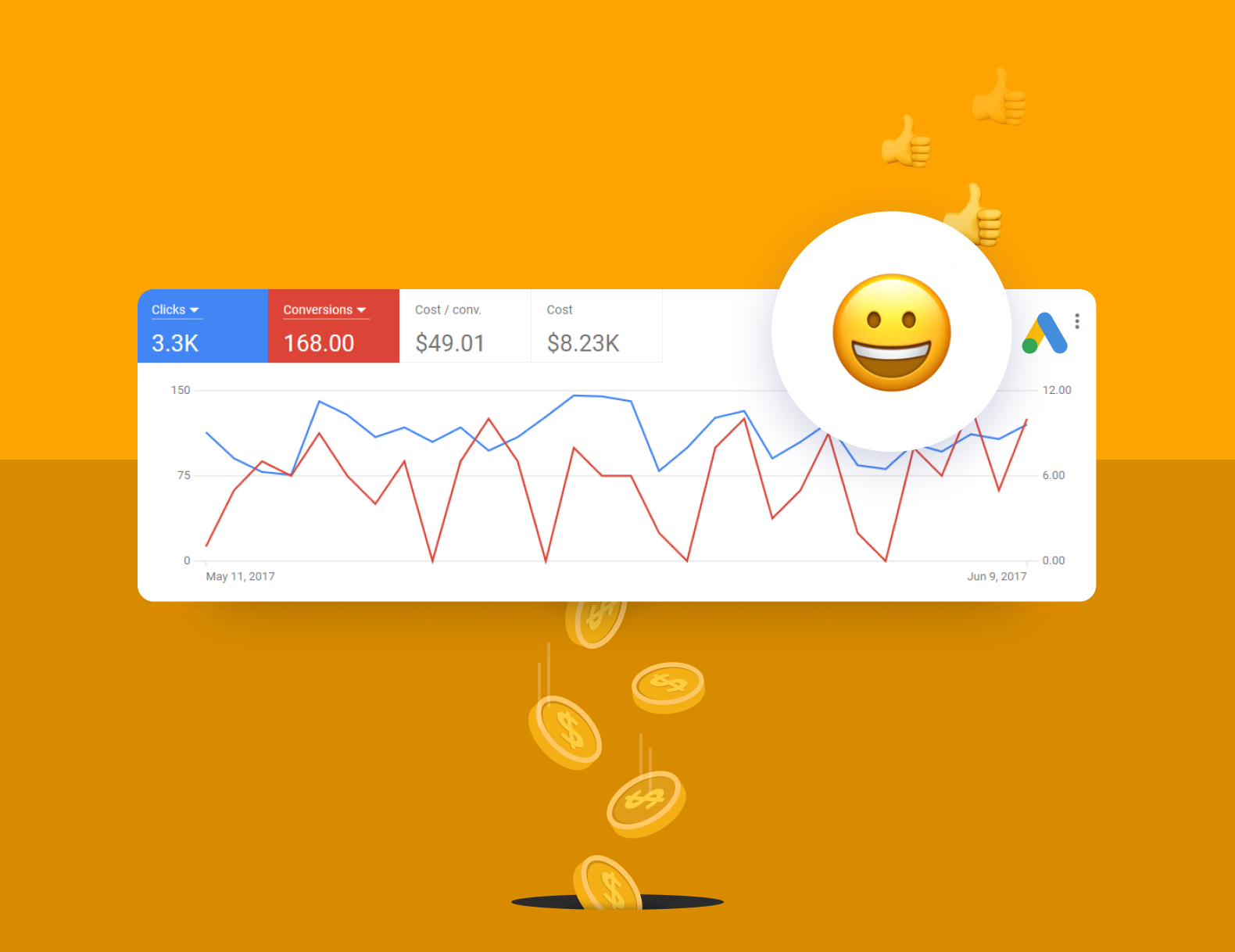
A low cost per acquisition isn’t proof of clean spend, it’s often camouflage for invisible waste. Google’s default reporting shows you the average, not what’s behind it, so a meaningful share of branded search budget goes to repeat clicks from already-acquired users and bot traffic that never converts. This post pressure-tests five widely-held beliefs that quietly let paid search waste compound. Each one is worth interrogating before you scale spend.
A clean-looking dashboard is not the same as clean data. Most performance teams running paid Search at scale are working from metrics that look healthy: strong CTR on branded, a low cost per acquisition, conversion rates that beat every other line item. The numbers are reassuring. Yet reassuring numbers are exactly the ones nobody audits.
The views Google gives you by default are designed to summarise, not to expose. They tell you what a campaign costs on average. They don’t tell you who actually clicked, how many times, or whether those clicks ever stood a chance of becoming a new customer. Here are five beliefs worth pressure-testing before you scale spend, and what the per-user data tends to reveal once you look underneath them.
1. “Our CAC is low, so waste isn’t really our problem.”
THE REALITY: A low cost per acquisition doesn’t mean nothing is being wasted. It means the waste is invisible.
The lower the headline number, the less anyone interrogates it. A brand acquiring users for a few dollars each rarely audits where those dollars go, because the unit cost feels like rounding error. But “cheap” acquisition is usually the most under-scrutinised line in the entire account, and percentage waste doesn’t shrink just because the per-user cost is small. It just stops being obvious enough to chase.
The brands most exposed to this aren’t the ones with expensive CPAs. They’re the ones efficient enough to stop looking.
2. “We know our CAC. We calculate it at conversion.”
THE REALITY: Most CAC math stops counting too early.
The standard calculation takes spend, divides by new customers, and stops at the moment of conversion. But the same user keeps clicking your branded ad for weeks or months afterward, to log back in, check an order, or return to the site. Every one of those clicks is charged. None of them are attributed back to that customer’s true cost.
So the CAC on your dashboard is a snapshot taken at the best possible moment. The trailing cost, the one that includes the entire downstream click history of an acquired user, is higher, often materially. You’re measuring the cost of winning a customer while ignoring the cost of continuing to pay for them.
3. “A thousand clicks, ten conversions. We know what that user costs.”
THE REALITY: The average hides the distribution, and the distribution is where the waste lives.
Aggregated reporting tells you a campaign drove a thousand clicks and ten conversions, so you calculate a tidy cost per conversion. What it can’t show you is the shape of those thousand clicks. One user might have clicked twenty times and cost twenty dollars. Another clicked once, cost two, and converted. Same blended average. A completely different truth about where your budget actually went.
Stitching clicks to individual users (by device, user agent and session signals) turns that average back into a distribution. TrafficGuard’s audit data consistently shows the same pattern: a small number of high-frequency users account for a disproportionate share of paid clicks. You can’t fix what the average is hiding.
4. “High CTR on branded search is a sign of a healthy campaign.”
THE REALITY: Branded search is often your customers’ bookmark bar, and you’re paying for every visit.
The branded campaign looks like your best performer. Low CPC, high CTR, a conversion rate nothing else touches. It’s also where the waste hides best.
The pattern is consistent across verticals. A high-frequency clicker, very likely an existing customer, keepsusing your paid branded ad as a gateway back to the site, sometimes five, ten, twenty times a day. They were always going to return, and the organic listing sat right underneath the ad. Staying in the paid auction still matters, it keeps competitors from sniping your branded terms, but you don’t want to keep paying for the same user clicking over and over when they would have reached you TrafficGuard’s published audit data shows that in branded Search campaigns, high-frequency, repeat clickers (very likely existing customers) make up around 37% of clicks and bots another 6 to 8%, adding up to roughly 44% of branded search clicks that were never going to drive new acquisition. In one retailer audit we did recently, a single user clicked 31 times in a single day. Every click charged, none of it new revenue.
5. “Bots are a small percentage. Not worth worrying about.”
THE REALITY bot click isn’t just wasted money. It’s bad training data.
Even if invalid traffic is a modest share of clicks, the cost is doubled. First, the obvious one: you serve an ad to something that was never going to become a customer, and you pay the CPC. Second, and more expensive in aggregate, that click becomes a signal. Google Smart Bidding and Meta Advantage+ learn from the click, engagement and conversion data they’re fed. When bot or non-incremental traffic gets into that data, the algorithm learns to chase more of the same. The wasted spend is a flat cost. The contaminated optimisation compounds.
This is why “it’s only a few percent” is the wrong frame. According to Juniper Research, global ad-fraud losses now exceed $100 billion in 2026 and continue to rise, with AI-driven traffic the fastest-growing contributor. The brands that treat that as someone else’s problem are usually the ones whose headline metrics look fine, which is precisely the camouflage that lets it compound.
How TrafficGuard Addresses It
TrafficGuard sits upstream of your branded campaigns and gives performance teams what Google’s native reporting can’t: a per-user view of every paid click. Each interaction is stitched to a unique user identity using device, user agent and session signals, which turns aggregated averages back into a distribution. Teams running paid Search at scale use this view to see exactly how their branded budget splits between net-new acquisition and repeat clicks from high-frequency users who are very likely already-acquired customers, which is the single most under-audited line in most accounts.
Once that visibility is in place, TrafficGuard for Search caps excessive repeat clicks from high-frequency users once their click activity passes normal levels and blocks invalid traffic in real time, excluding the malicious IPs and devices from seeing your ads before they can keep clicking. Your campaign stays live in the auction, so competitors can’t snipe your branded terms. The organic listing still catches returning customers, so brand visibility stays intact, and Smart Bidding optimises against a cleaner signal.
This is the differentiator that matters. Most click fraud protection tools operate post-hoc, excluding invalid traffic from reporting after the spend has already cleared. TrafficGuard excludes those sources from your ads in real time, stopping them before they keep spending your budget ,which is also what protects the bidding model from contaminated conversion signals downstream. The result is a measurable shift in how branded budget compounds: repeat-clicker spend goes down, net-new acquisition cost goes down with it, and the algorithm receives cleaner training data to optimise against.
Frequently Asked Questions
What is “branded search waste”?
Branded search waste is paid budget spent on branded keyword clicks that don’t drive new customer acquisition. It typically includes repeat clicks from users you’ve already acquired, plus bot traffic that never converts. It hides well in Google Ads because branded campaigns usually show high CTR, low CPC and strong conversion rates. The waste sits inside the average, not on top of it.
How can I reduce wasted spend from branded search without losing brand traffic?
Start by disaggregating branded-search clicks at the user level, because Google’s default reporting only shows the average. Once you can identify excessive repeat-clickers (very likely existing customers), cap or suppress their paid impressions once their click activity passes normal levels. Your campaign stays in the auction, so competitors can’t snipe your brand terms, the organic listing still catches them, the freed budget moves toward net-new acquisition, and your brand visibility stays intact.
Why does a low CAC sometimes hide wasted ad spend?
A low cost per acquisition doesn’t mean nothing is being wasted. It means the waste is invisible. Standard CAC math stops counting at the moment of conversion and ignores the downstream clicks the same user makes returning to your site over the following weeks. The lower the headline number, the less anyone audits it. That’s where waste compounds.
How do I see Google Ads spend at the user level?
Google Ads doesn’t surface user-level reporting by default. Campaign data is aggregated to clicks, conversions and CPA. To see paid traffic per individual user, you need an external layer that stitches each click to a user identity using device, user agent and session signals. A TrafficGuard audit produces this view across live Google Search campaigns over a 14-day window.
Are repeat clicks from already-acquired customers really hurting my campaigns?
Yes, in two compounding ways. Every repeat click is charged at full CPC, and across weeks of returning visits this can absorb a meaningful share of branded-campaign budget. Worse, those clicks feed Google Smart Bidding the signal that high-engagement users are the audience to chase, so the model bids harder for people who were already going to return.
Do bots really affect Smart Bidding optimisation?
Smart Bidding and Meta Advantage+ optimise against the conversion signals they receive. When bot or non-incremental traffic gets into that data, through pixel events, conversion fires, or polluted audience pools, the model learns to chase more of the same. The wasted click spend is a flat line item; the contaminated optimisation compounds over weeks until it’s corrected.
How quickly can I see branded-search waste in my account?
Most accounts show clear patterns within two weeks of granular user-level analysis. A 14-day TrafficGuard audit on live Google Search campaigns is usually enough to identify what share of branded spend goes to repeat-clickers versus net-new users, where the long-tail high-frequency clickers sit, and what the recoverable budget looks like at current spend levels.
The Bottom Line
Every belief covered above is reasonable on its face. Each one is also why a specific kind of waste goes unexamined. The common thread isn’t that performance teams are careless, it’s that the default reporting layer doesn’t surface the view that would change their mind. Google shows you the average. It doesn’t show you what’s behind that average, so most teams never think to ask.
The fix isn’t smarter bidding or a bigger budget. It’s visibility: the ability to see paid traffic at the user level, separate net-new acquisition from re-engagement, and free up the difference for growth that actually compounds.
Book a free 14-day TrafficGuard audit →, see what your branded search spend looks like once it’s disaggregated by user.
Get started - it's free
You can set up a TrafficGuard account in minutes, so we’ll be protecting your campaigns before you can say ‘sky-high ROI’.

Explore More Blogs


Subscribe
Subscribe now to get all the latest news and insights on digital advertising, machine learning and ad fraud.


