

Shadow Campaigns for Fintech: Stop Paying Premium CPC for Users Who Already Know You
There is a moment in many search audits when the problem becomes impossible to ignore.
Budgets look healthy. Conversion rates appear stable. Nothing in Google Ads suggests anything is wrong.
In fintech, where high-intent keywords like loans, credit cards, and savings products command some of the highest CPCs in paid search, this inefficiency compounds quickly.
Then you examine individual user journeys.
The same person clicks the same paid ad again and again. Sometimes ten times. Sometimes twenty. Each click is charged. Very few are incremental.
This is not fraud in the traditional sense. But it sits outside what most click fraud protection for fintech is designed to detect.
It is repetition. It is expensive.
And shadow campaigns exist for this exact moment.
Most Paid Search Waste in Fintech Does Not Come From Bots
Across the many high-CPC search audits we have run, one pattern appears consistently.
Most users behave exactly as expected. They click once or twice, explore, and either convert or move on. In fact, data from recent audits shows that 93% of users click three times or fewer within a 24-hour period.
That means just 7% of users are driving the disproportionate share of non-incremental spend.
In a recent audit of a large-scale fintech comparison site running high-CPC generic keywords across multiple product verticals, a single user clicked superannuation ads repeatedly within a short window, generating 19 paid clicks and over $75 in cost. The behaviour was consistent and deliberate, but did not represent new demand.
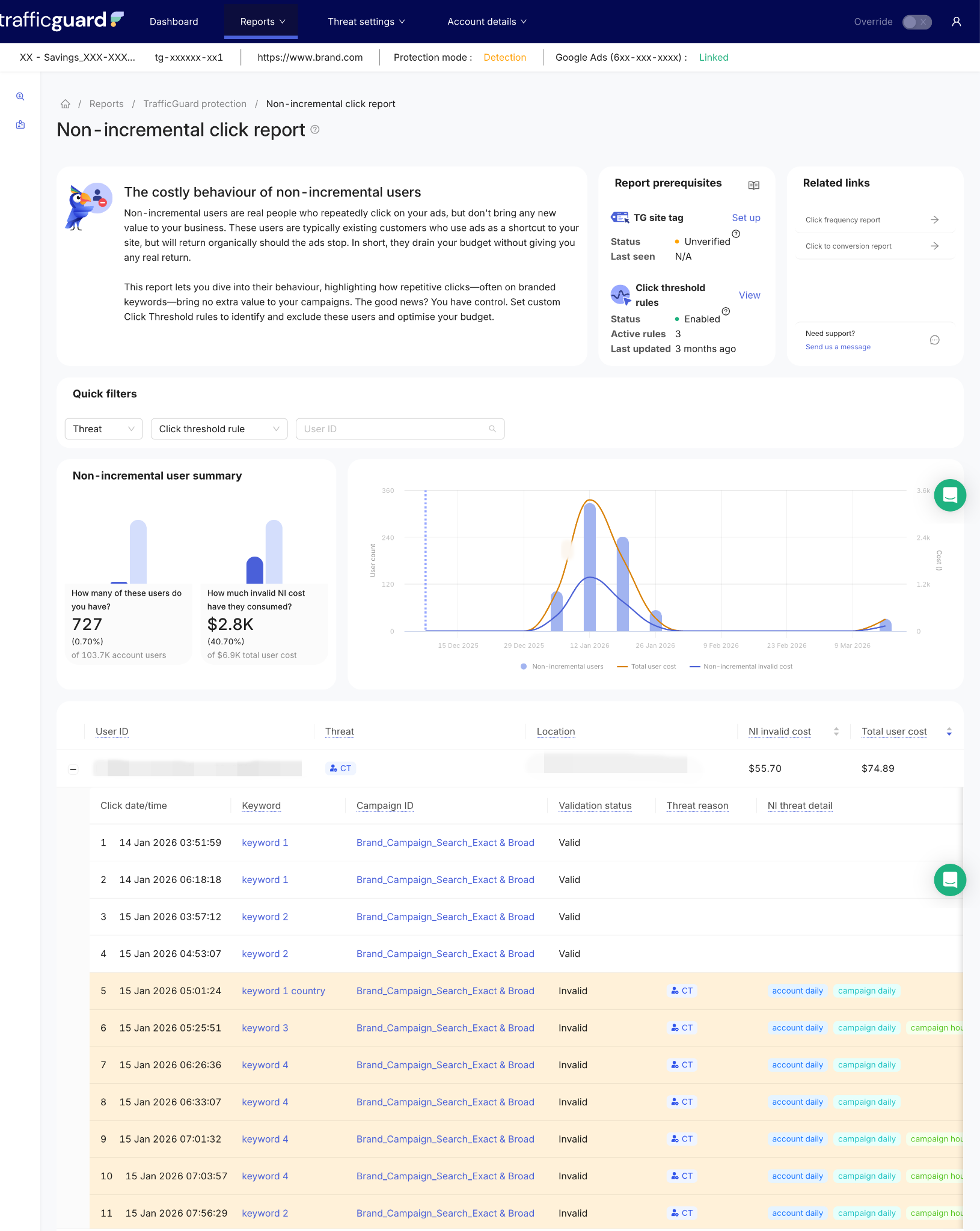
At campaign level, nothing looks broken. At user level, the inefficiency is obvious.
Non-incremental engagement is the core of this problem. Our VP of Sales, Kalen Bushe, breaks down exactly what it means and why it matters in this short video:
Why Blocking Repeat Users Makes the Problem Worse
Removing repeat users entirely rarely solves the problem.
When paid visibility drops suddenly, behaviour does not disappear. Users still return, but through different brand queries, new keyword variations, or indirect paths. Spend shifts rather than declines, and control weakens as pricing gives way to exclusion.
There is also the question of scope. Rules are applied per campaign, not per account. If a user is blocked on one product category after exceeding the click threshold, they can still discover your ads on a completely different product line. This prevents over-blocking and preserves the commercial value of users who are genuinely researching across categories.
Equally important: exclusions reset every 24 hours. A user who clicks too many times today is rotated off for the rest of the day, then re-enters the auction tomorrow. No one is permanently removed. This is a pricing adjustment, not a blacklist.
The issue is not that these users should disappear from search. It is that they are being priced as if every click represents discovery, long after discovery has already happened.
How Shadow Campaigns Reduce CPC Waste Without Removing Visibility
Shadow campaigns address this mismatch directly. They do not remove users from search. They change how repeat behaviour is priced.
A user clicks your primary campaign once. Then again. Then a third time within a defined period. Up to this point, nothing changes. Full CPC applies.
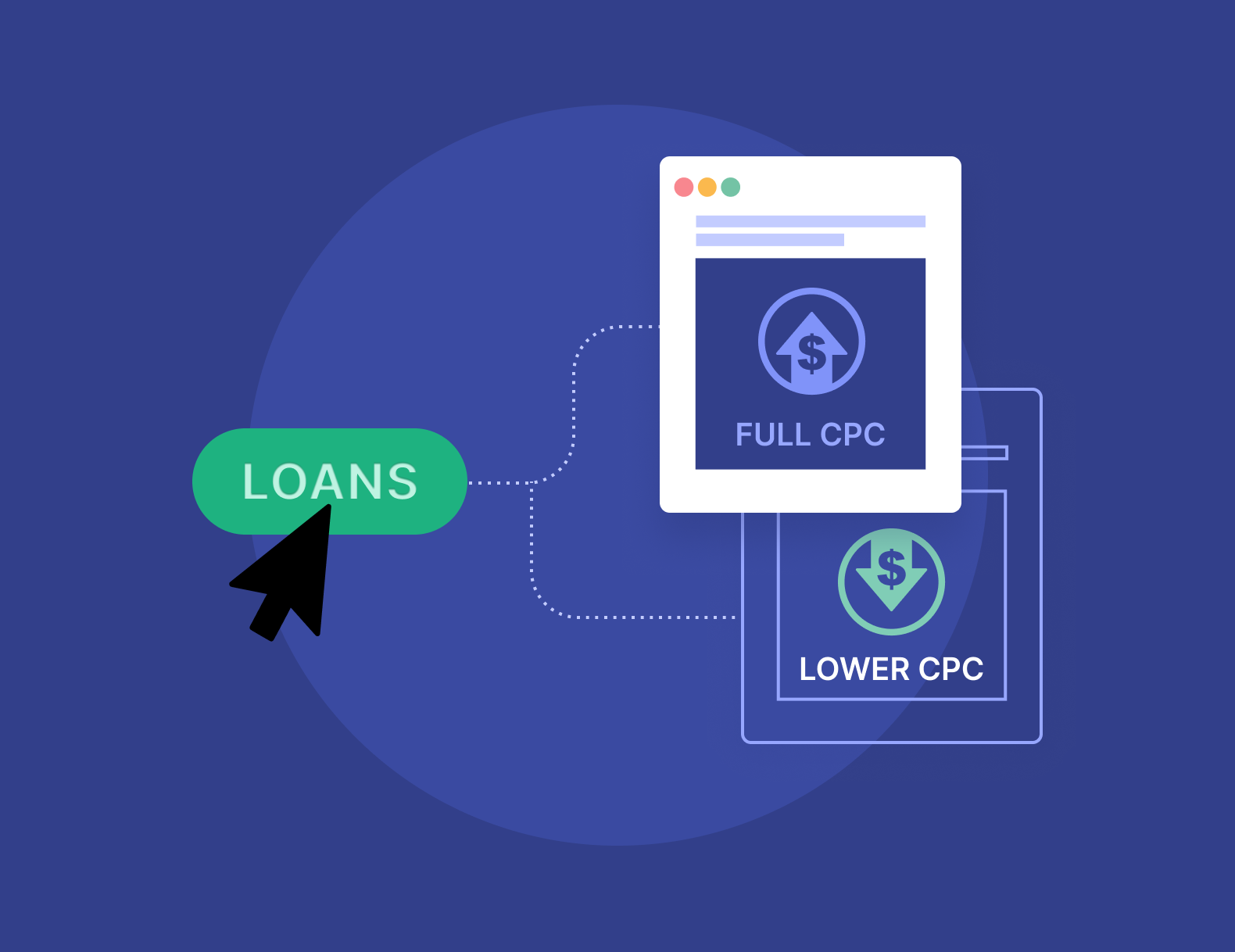
After the threshold is reached, pricing changes instead of visibility. The user is routed into a shadow campaign that mirrors the original: same keywords, same ads, same landing pages. The only difference is bid level.
In one live client example, the primary campaign CPC was $0.70. Once the user was routed to the shadow campaign, the CPC dropped to $0.17. That is a 75% reduction on a per-click basis, with zero loss of visibility.
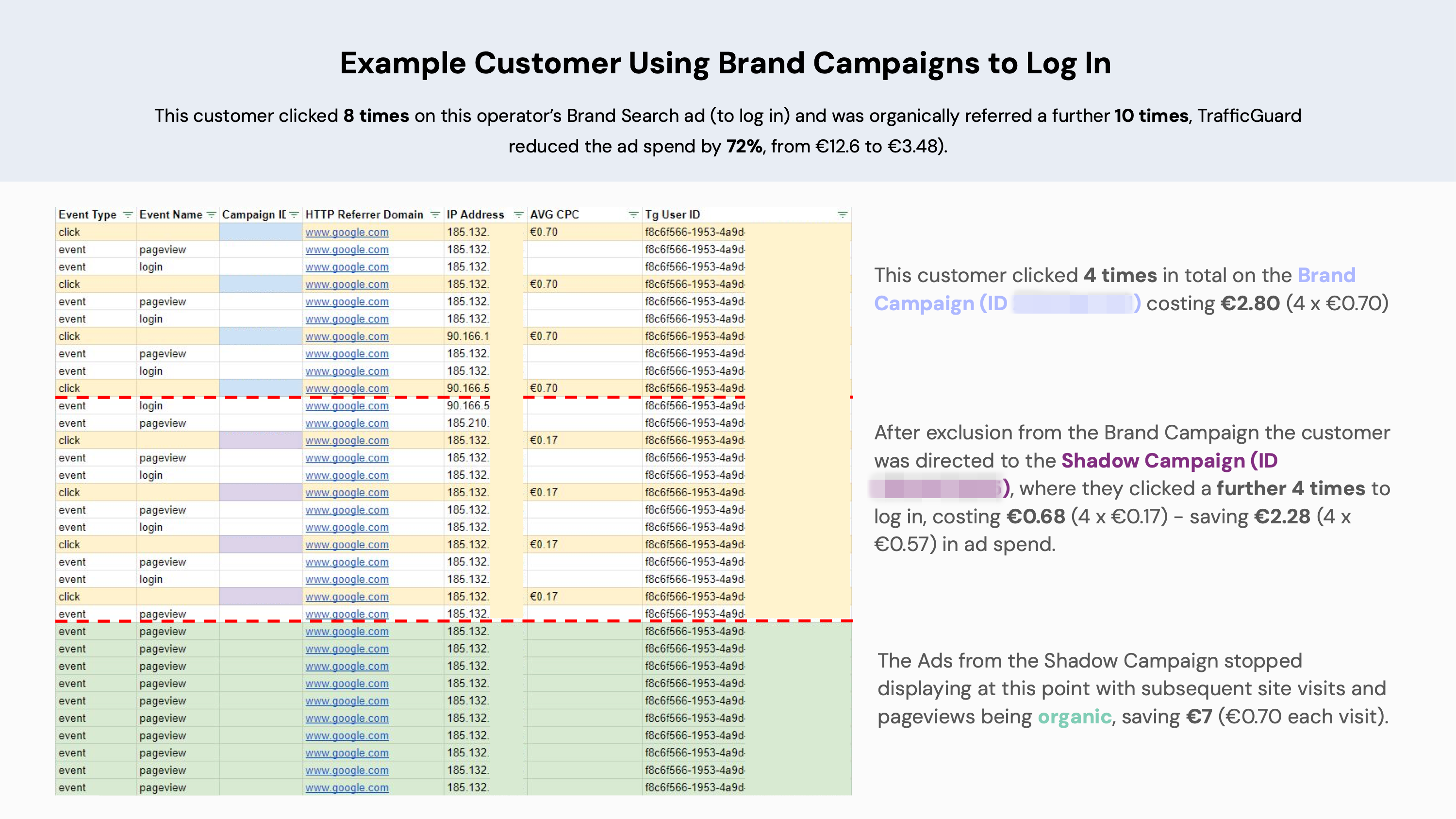
The threshold is fully customisable on a campaign-by-campaign basis. Some campaigns may trigger after three clicks, others after five or seven, depending on margins, average revenue per user, and the CPC of the keywords involved. Around half of the accounts we work with use shadow campaigns to reduce cost gradually. The other half prefer to route users straight to organic after the threshold. Both approaches work. The right one depends on your business model.
Want to see how shadow campaigns work in practice? Watch the short walkthrough by our Senior Solutions Engineer Aaron:
Real User Data: Why the Numbers Compound Quickly
The impact becomes clearest at an individual level.
In one representative journey from the same fintech audit, a single user generated 19 paid clicks over a short period. Total cost climbed to $78 despite no incremental conversion.
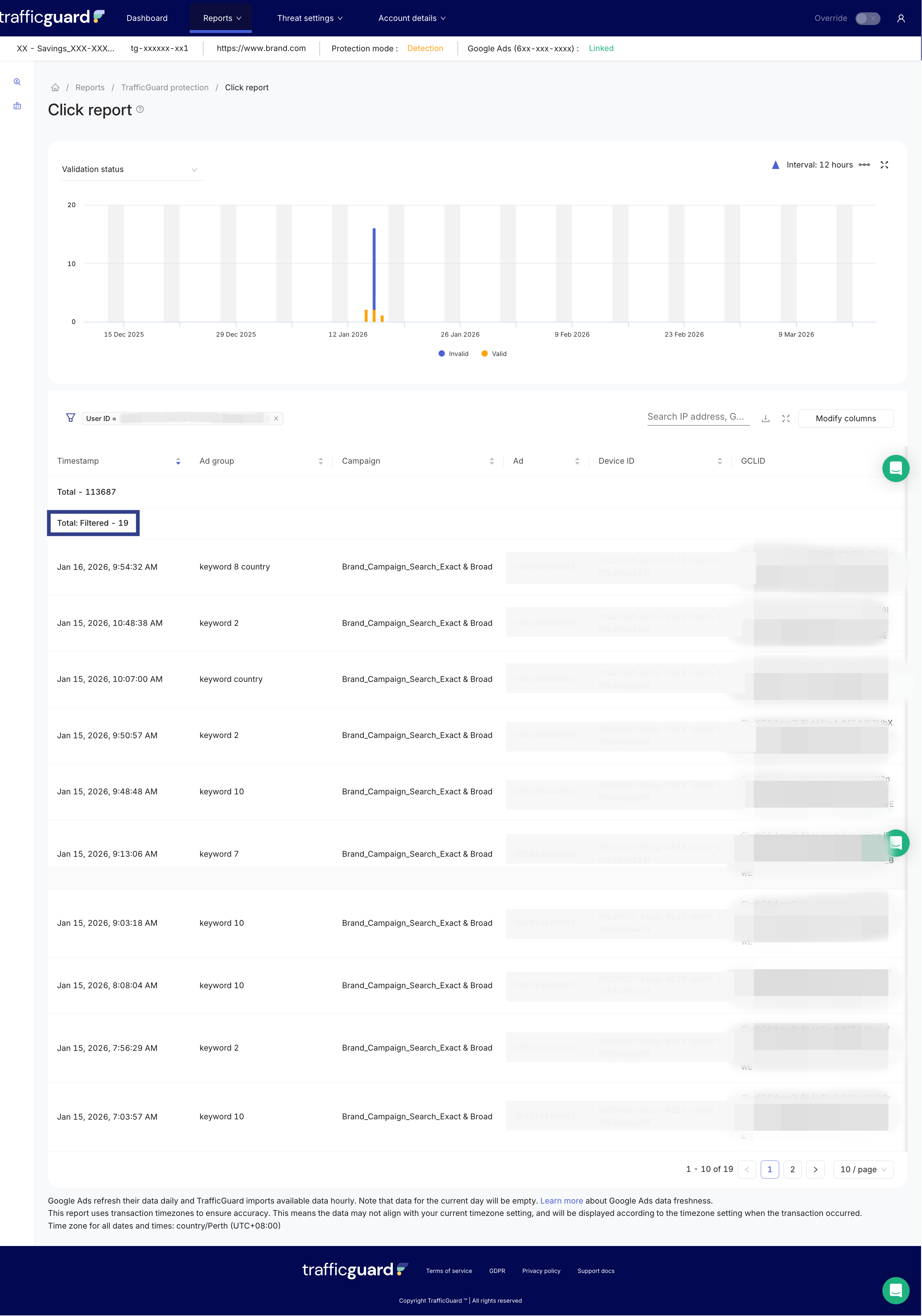
With pricing adjusted after repeat engagement, initial clicks remained fully priced, subsequent clicks were routed to a lower-bid campaign, and total cost dropped by more than 80%. The behaviour did not change. Only the cost did.
When this pattern appears across hundreds of users, the efficiency gains compound quickly. In this particular audit, 555 individual users were responsible for the non-incremental waste on just one account. That is 0.7% of the total user base driving over $2,100 in wasted spend every two weeks.
Generic Keywords Are Where Fintech CPC Waste Concentrates
Across many audits, the vast majority of non-incremental clicks originate from generic keywords. In the fintech comparison platform audit referenced above, 99% of non-incremental traffic from hyper-engaged users came from generic keywords.
Generic keywords naturally attract higher CPCs, comparison-heavy behaviour, multi-tab browsing, and repeated searches in short timeframes. Each action makes sense in isolation. Together, they concentrate the ad spend around familiarity rather than acquisition.
Shadow campaigns allow discovery to continue while preventing repeat navigation from absorbing a disproportionate share of budget.
This Is a Paid Search Efficiency Problem, Not a Fraud Problem
Every user routed into a shadow campaign is real. They are comparing options, returning to familiar brands, or using Google as a convenient entry point.
Paid search does not distinguish between discovery and familiarity. A click is a click, and the price stays the same.
One common assumption is that Google already handles this. Platforms do issue retrospective refunds for invalid traffic, and some advertisers receive meaningful credits each quarter. But even where refunds occur, they arrive weeks or months after the spend. In the meantime, the budget that could have been directed at net new users has already been consumed by repeat clicks. You cannot optimise retrospectively.
Shadow campaigns recognise what the platform does not: intent evolves, and pricing should evolve with it. They are not just a cost savings tool. They are a real-time optimisation layer that redirects spend toward acquisition as it happens, rather than waiting for a credit that arrives too late to change outcomes.
How to Know Whether This Applies to Your Account
When this pattern exists, the signals are consistent:
- A small percentage of users driving a large share of spend
- Multiple clicks within short timeframes
- Generic campaigns absorbing disproportionate cost
- Paid clicks followed by direct or organic returns
If 93% of your users convert or move on within three clicks, the remaining 7% are likely to cost you far more than they return.
When these signals appear together, overpayment is already happening.
Pricing Intent Correctly Changes How Paid Search Performs
Most paid search optimisation focuses on keywords, ads, and bids. Shadow campaigns focus on users.
They recognise a simple reality: not every click from the same person represents new demand. Some clicks expand reach. Others simply repeat it.
Once pricing reflects that distinction, performance stabilises. Spend shifts back toward acquisition without sacrificing visibility or control.
See What Your Repeat Click Exposure Looks Like
A two-week TrafficGuard audit will show you exactly how much of your paid search budget is going to users who already know you. No tag changes required to start. Just a tracking template in Google Ads.
In the fintech comparison platform audit above, the total non-incremental, bot, and non-genuine traffic exposure came to over $500,000 annually. For every dollar invested in mitigating that waste, four dollars came back in recoverable media spend.
If you are running high-CPC generic keywords at scale, the same pattern is likely sitting in your account right now.
Request a free paid search audit
Frequently Asked Questions
What is a shadow campaign in paid search?
A shadow campaign is a duplicate of a primary Google Ads campaign with the same keywords, ads, and landing pages, but a lower bid. Used by TrafficGuard, it re-prices repeat clicks: once a user passes a click threshold, their clicks route to the lower-bid mirror campaign. The user sees no difference; only the CPC changes.
Is repeat clicking the same as click fraud?
No. Repeat clicking is a paid search efficiency problem, not fraud. Users who click the same ad repeatedly are real people comparing options or returning to a familiar brand through Google. The problem is pricing: paid search charges a familiar user's tenth click at the same CPC as a new user's first.
What is a non-incremental click?
A non-incremental click is a paid click that does not represent new demand. The user has already discovered the brand and is returning out of familiarity, yet each click is charged at full CPC. In TrafficGuard's fintech audits, 93% of users click three times or fewer in 24 hours; the remaining 7% drive the bulk of non-incremental spend.
Doesn't Google already refund invalid clicks?
Google refunds invalid traffic retrospectively, but credits arrive weeks or months after the spend, when the budget has already been consumed by repeat clicks. Refunds cannot be reinvested in real time. Shadow campaigns work differently: they adjust pricing as repeat behaviour happens, redirecting spend toward new users immediately.
How much can shadow campaigns reduce CPC?
Shadow campaigns reduce CPC on repeat clicks by up to 75%. In one live TrafficGuard client example, primary campaign CPC was $0.70 and dropped to $0.17 once repeat users were routed to the shadow campaign. One fintech user who generated 19 paid clicks and $78 in cost saw total cost fall by more than 80%, with zero loss of visibility.
Can the click threshold be customised?
Yes. The threshold is set campaign by campaign, typically at three, five, or seven clicks, depending on margins, average revenue per user, and keyword CPC. Around half of TrafficGuard accounts use shadow campaigns to reduce cost gradually; the other half route users straight to organic after the threshold. Both approaches work.
Do shadow campaigns remove users from search results?
No. Shadow campaigns change how repeat clicks are priced, never whether ads appear. Thresholds apply per campaign, not per account, so a user capped on one product line still sees ads on others. Exclusions reset every 24 hours, so no one is permanently blocked. It is a pricing adjustment, not a blacklist.
Why do generic keywords cause the most paid search waste in fintech?
Generic fintech keywords like loans, credit cards, and savings products combine high CPCs with comparison-heavy behaviour: multi-tab browsing and repeated searches in short windows. In one TrafficGuard audit of a fintech comparison platform, 99% of non-incremental traffic from hyper-engaged users came from generic keywords.
How do I know if repeat clicks are wasting my ad budget?
Four signals indicate repeat-click waste: a small percentage of users driving a large share of spend, multiple clicks from the same user in short timeframes, generic campaigns absorbing disproportionate cost, and paid clicks followed by direct or organic returns. In one fintech account, 0.7% of users drove over $2,100 in wasted spend every two weeks. A two-week TrafficGuard audit quantifies the exposure.
Get started - it's free
You can set up a TrafficGuard account in minutes, so we’ll be protecting your campaigns before you can say ‘sky-high ROI’.

Explore More Blogs

Subscribe
Subscribe now to get all the latest news and insights on digital advertising, machine learning and ad fraud.


